|
 |
Jepa Foundations Education and Authentic Development |
 |
||||||||||||
|
|||||||||||||||
|
|
Jepa Model Clinics
The public health service in Guatemala is offered through structures identified as primary (aids, nurses, promoters in rural areas), secondary (medical attention in puestos de salud) and tertiary (hospitals). Private clinics are also available to patients of medium and high economical status. Some Foundations also assist in areas of particular necessity. Most pharmacies are private or administered by cooperatives, these last ones are called communal pharmacies and offer generic products at an affordable cost. The price of the medicine in Guatemala is generally high. A public distributor (PROAM) provides low cost medicine for most frequent diseases.
The problems associated to the public health service in Guatemala are similar to the problems (frequently highlighted by WHO) occurring in other developing countries:
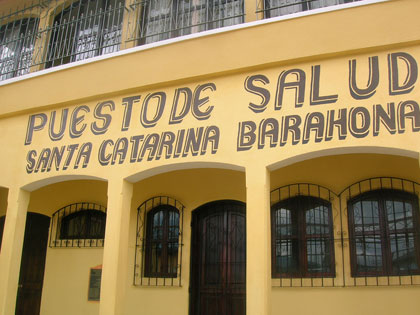
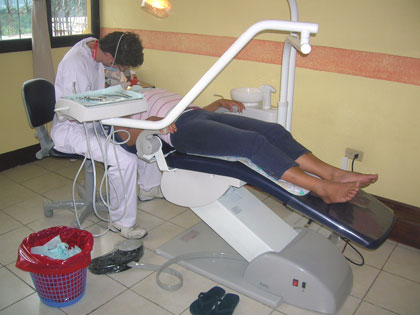
An alternative possibility, already implemented in a few communities, is the development of small clinics, managed by each municipality. The Foundation accepted the invitation by the Mayors of Santa Catarina (2009), San Miguel Dueñas (2011) and Alotenango (2013) to supply the equipment for three municipal dental clinics (cost 10000 USD each) serving also patients from neighboring towns. The Foundation had however requested that the clinic should be run in a most efficient way as to offer a model of efficiency which, in the long run, would rejuvenate the public health system in Guatemala. The clinic in Santa Catarina does indeed represent low cost model of efficiency, quality and a constructive cooperation between the Foundation and the municipalities. On the other hand, the clinic in Alotenango had to be closed just before inauguration due to unwillingness of the Municipality to comply with the regulation requested by the Foundation, promoting instead a profit -making private clinic. The clinic in San Miguel Duenas worked well until 2016 when a new Administration failed to provide thequality management of the previous administration. On the basis of the above result the Foundation was able to make explicit suggestions to the Ministry of Health for the establishment of a system of clinics run by municipality in cooperation with a non-profit, private organization. However, no answer as yet been received from the Ministry. |